Insights & Updates
Market intelligence generated by our partners.

ROB · Gross Operating Revenue
Gross Operating Revenue
What ROB means and how to interpret its value in the income statement ROB stands for Gross Operating Revenue. It is the value of revenues generated by the company's main activities, before the deductions presented on gross revenue, such as returns, unconditional discounts and taxes on sales, according to the applicable treatment.
View Article
CPC 20 · CPC 46
CPC 20 and CPC 46
CPC 20 provides guidance on when borrowing costs are included in the cost of an asset. CPC 46 provides guidance on how to measure fair value. This material presents the essential concepts and simplified educational examples, without taxes or additional costs not disclosed.
View Article
Insights
Measurement of assets
The measurement of an asset involves decisions at different points in time: initial recognition, the appropriation of the consumption of its benefits, and the verification of the recoverability of its carrying amount. The four standards complement each other.
View Article
Insights
International business management
Support material for studying and teaching International Accounting. Organized for Profa. Marli Voss Hartmann da Silva — Versatilis Estudos e Conceitos.
View Article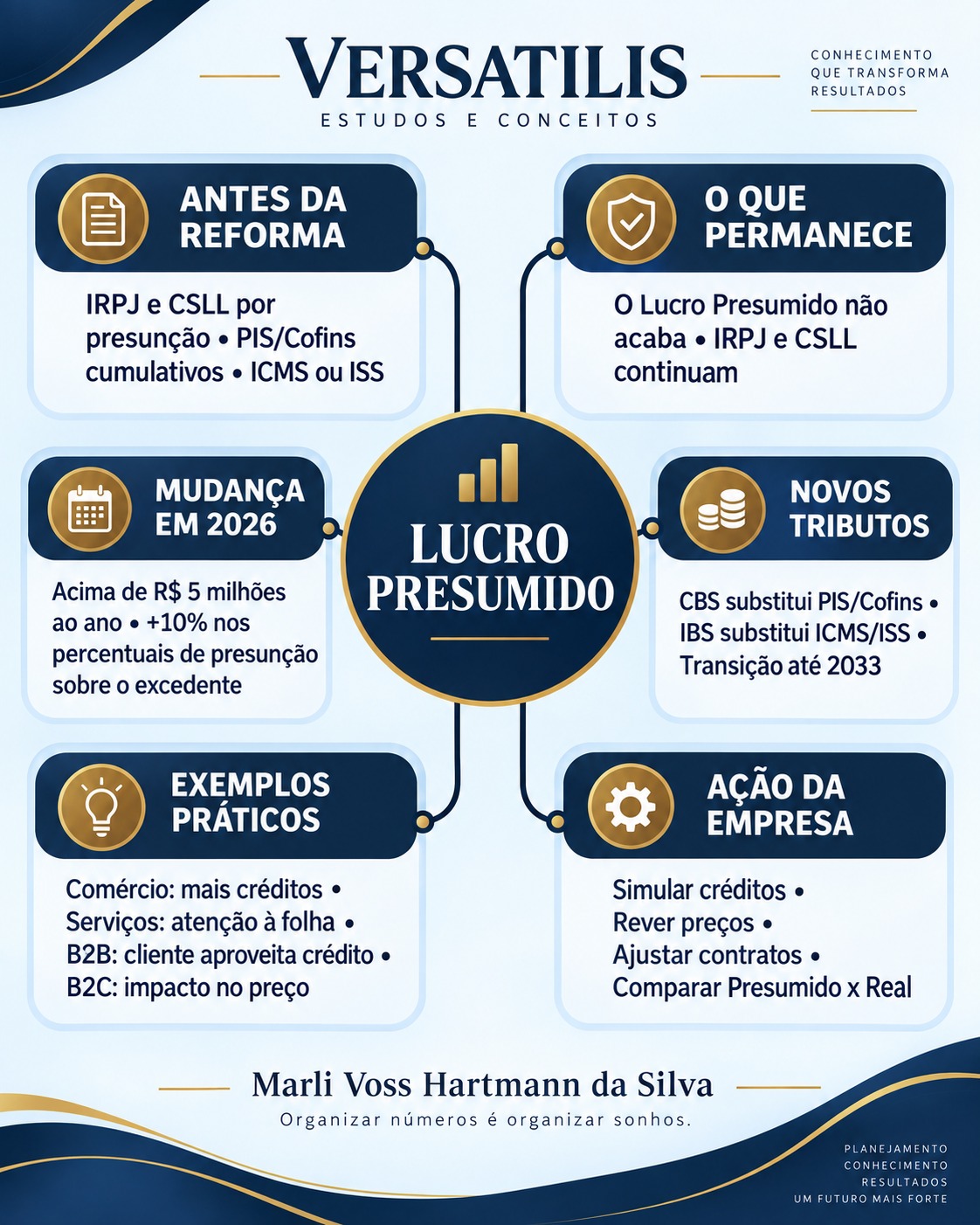
Lucro Presumido · Reforma Tributária
Lucro Presumido before and after the Reforma Tributária
What changes in IRPJ and CSLL, and how IBS and CBS affect costs, prices, credits, and business decisions
View Article
Fixed Assets · Reforma Tributária
FIXED ASSETS × REFORMA TRIBUTARIA
Reforma Tributária profoundly changes consumption taxes on the purchase and sale of fixed assets, but does not eliminate the taxation of capital gains by IRPJ and CSLL.
View Article

Accounting Office · The Monk and the Executive
How to Use the Book The Monk and the Executive in Accounting Offices
...
View Article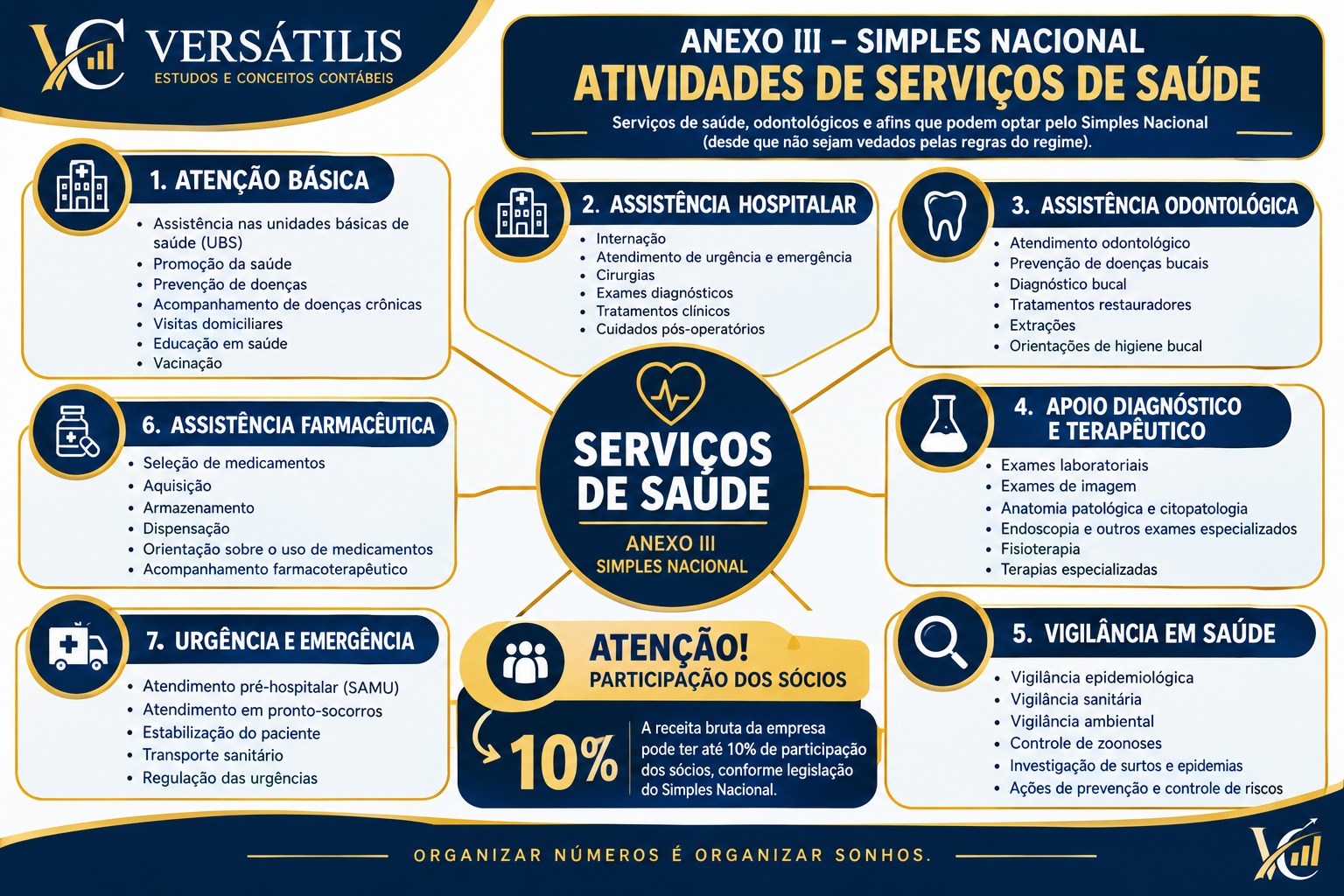
Reforma Tributaria · Healthcare Area
PRICING IN THE HEALTHCARE SECTOR
The tax reform changes the pricing logic in the health sector because IBS and CBS adopt a consumption taxation model with broader credits, "off-invoice" incidence, and differentiated treatments. Complementary Law No. 214/2025 reduces IBS and CBS rates by 60% for health services expressly listed in its Annex III. This does not mean a final rate of 60%, but the application of 40% of the standard rate.
View Article