
How it was, how it will be, and what changes in the calculation of capital gains
Central Idea
Reforma Tributária profoundly changes consumption taxes on the purchase and sale of fixed assets, but does not eliminate the taxation of capital gains by IRPJ and CSLL.
Marli Voss Hartmann da Silva
Versatilis Studies and Concepts | September 2026
I don't see any text to translate. Please share the content you'd like translated.
Summary
Fixed assets comprise tangible goods held for use in production, in the supply of goods or services, for rental, or for administrative purposes, which are expected to be used for more than one period. The consumption tax reform mainly changes the recovery of credits on acquisition and the incidence on the disposal of these assets. In the previous system, the occasional sale of a fixed asset item, as a rule, was not included in the PIS/Cofins base and did not constitute an operation taxed by ICMS, although the capital gain remained subject to IRPJ and CSLL. In the new model, the onerous sale operation, as a general rule, falls within the scope of IBS and CBS, whose base is the transaction value; at the same time, the capital gain continues to be calculated as the difference between the disposal value and the net book value. Thus, there will be two distinct analyses: one on the transaction price and another on the economic result of the sale.
Keywords: fixed assets; IBS; CBS; tax credit; depreciation; capital gain; IRPJ; CSLL.
Why this topic deserves attention
Machines, vehicles, equipment, furniture, computers, and operational real estate represent significant investments and remain in the company for several years. Therefore, taxation should not be examined only at the time of purchase. The complete cycle includes accounting recognition, depreciation, appropriation of credits, eventual write-off, and sale.
The main conceptual change is simple but decisive: in the new system, the consumption tax and the income tax have different bases. IBS and CBS generally apply to the sale transaction value. IRPJ and CSLL apply to the assessed gain, according to the legal entity's tax regime. Confusing sale price with capital gain leads to mistaken cash flow and price projections.
2. What are fixed assets and how is the gain calculated?
Under CPC 27, an item of property, plant and equipment is recognized when it is probable that future economic benefits associated with the asset will flow to the entity and its cost can be measured reliably. After recognition, depreciation allocates the depreciable amount over the estimated useful life.
Essential Formula
Capital gain = disposal value − net book value of the asset
Net book value corresponds, in simplified terms, to the acquisition cost plus capitalizable expenses, minus accumulated depreciation and any impairment losses. If the formula result is negative, there will be a loss on disposal, not a gain.
3. How it was in the previous system (Current until 2026)
Before the full implementation of IBS and CBS, the acquisition and sale of fixed assets were examined under fragmented rules of ICMS, IPI, PIS/Pasep, and COFINS, in addition to IRPJ and CSLL. The treatment varied according to the asset, the activity, the tax assessment regime, and state legislation.
Aspect Predominant treatment before the reform
Acquisition Conditional credits, often recognized in installments or tied to depreciation, depending on the tax.
ICMS on sales The exit of an asset from permanent assets was not a taxable event for ICMS purposes, under the terms of Complementary Law 87/1996, except in specific situations.
PIS/Cofins on Sales Revenue from the disposal of non-current assets classified as fixed assets was excluded from the base.
IRPJ and CSLL The positive result of the sale remained subject to income taxation, according to the company's tax regime.
Practical effect Taxation on consumption at the output stage was limited, but recovery of taxes paid on inputs could be slow or incomplete.
4. How it will work with IBS and CBS
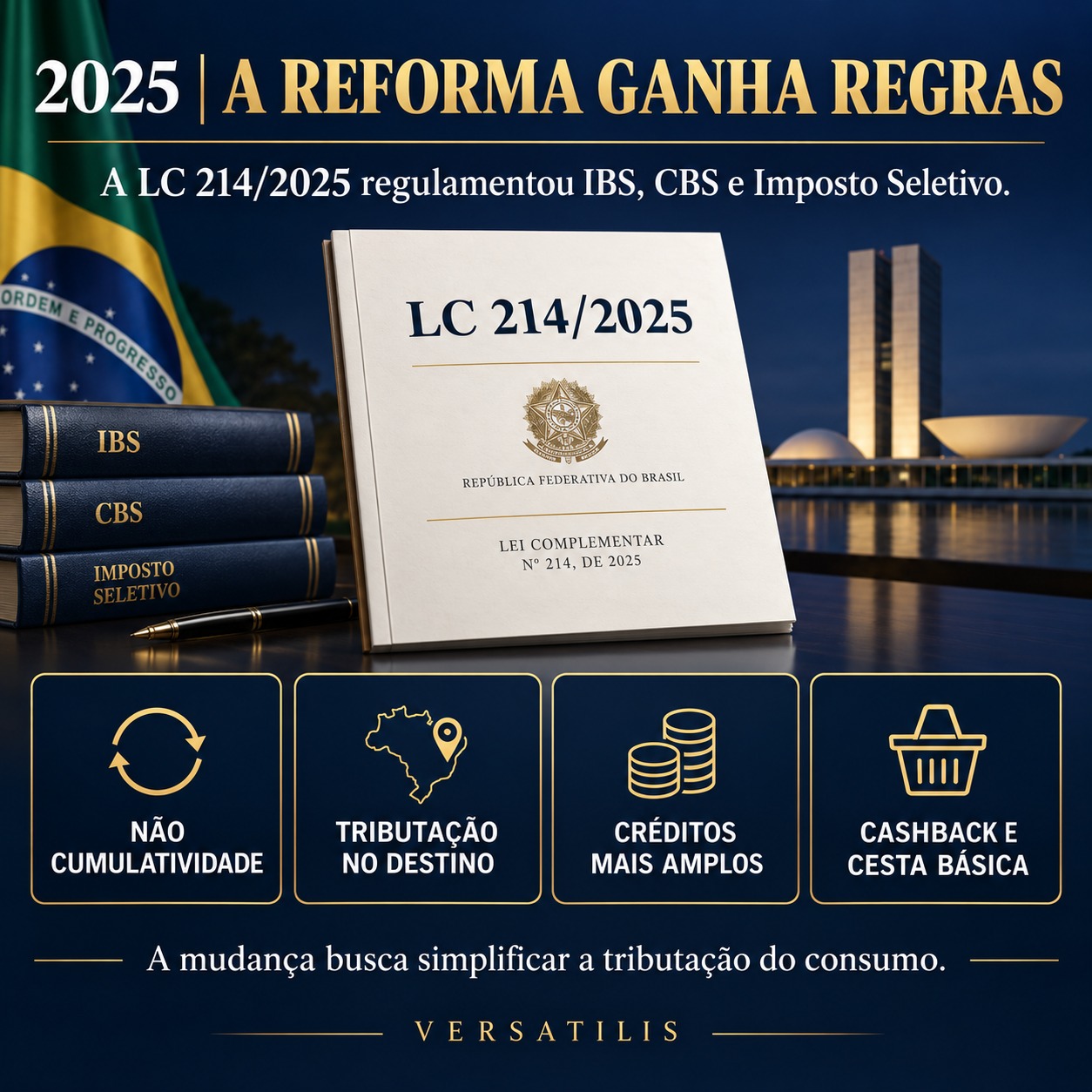
Complementary Law No. 214/2025 adopts a broad base: IBS and CBS apply to onerous transactions involving goods and services, and the calculation basis, unless a special rule applies, is the transaction value. This includes the disposal of assets that were classified in the taxpayer's fixed assets.
At the outset, the design aims to reduce the tax burden on productive investment. For taxpayers under the regular regime, the law ensures full and immediate credit of IBS and CBS on the acquisition of capital goods, subject to legal conditions, proper tax documentation, and the extinguishment of the transaction's debt. There may also be suspension scenarios that convert to a zero rate after incorporation into fixed assets.
On exit, the company must issue the fiscal document with the applicable IBS and CBS treatment. As a rule, the basis will be the sale price, not just the accounting gain. If the buyer is under the regular regime and meets the requirements, the acquisition tax may generate credit for them, preserving the non-cumulative logic.
Attention
The IBS and CBS levied on the sale are not “capital gains tax.” They tax the consumption transaction. The gain remains a separate measure for IRPJ and CSLL.
5. Comparison: before and after
Point Before New model
Credit on purchase Various rules; utilization often in installments. Full and immediate credit for capital goods under the regular regime, subject to conditions.
Asset Sale As a rule, no ICMS and with exclusion of PIS/Cofins. As a rule, onerous operations are subject to IBS/CBS on the value of the operation.
Capital gain Positive difference between sale and net book value. The gain logic remains for IRPJ/CSLL; it is not to be confused with IBS/CBS.
Business buyer Credits depended on the tax and on specific rules. You may take IBS/CBS credits under the regular regime, provided the requirements are met.
Planning Greater focus on write-off, depreciation, and IRPJ/CSLL. Requires integrating input credits, output debits, price, and capital gains.
6. Complete Practical Example
Consider a manufacturer that sells a machine from its fixed assets for the following amounts:
Information Value
Registered machine cost R$ 300,000.00
Accumulated depreciation R$ 180,000.00
Net book value R$ 120,000.00
Selling price R$ 200,000.00
Capital gain R$ 80,000.00
In the previous system, the occasional sale, while maintaining the legitimate classification of the asset as fixed assets, did not generally make up the PIS/Cofins base and was not taxed by ICMS. However, the R$ 80,000.00 gain was included in the calculation of IRPJ and CSLL according to the company's tax regime.
In the new model, there are two simultaneous layers:
• IBS/CBS: calculated, as a general rule, on the R$ 200,000.00 transaction value, applying the rates and rules in force on the date of sale.
• IRPJ/CSLL: the gain of R$ 80,000.00 remains considered in income taxation, according to the adopted regime.
If, just for simulation, the sum of the IBS and CBS rates were 28%, the nominal debit of the transaction would be R$ 56,000.00. This number is illustrative: the effective rate must be confirmed for the period, the destination entity, the good, and the applicable regime. The example shows that the VAT base is the price of R$ 200,000.00, while the capital gain is R$ 80,000.00.
7. Effect according to the tax regime
7.1 Actual Profit
The accounting gain is included in the period's results. Tax assessment must consider depreciation rules, adjustments in e-Lalur/e-Lacs, impairment losses, and other differences between corporate and tax bookkeeping. The final effect of IRPJ and CSLL depends on the total taxable profit, allowed offsets, and applicable surcharges.
7.2 Lucro Presumido
Capital gains do not receive the presumption percentages applicable to operating revenue. The positive difference between the sale value and the tax book value of the asset is added directly to the IRPJ and CSLL bases. In the example, the R$ 80,000.00 is added in full, without prior application of 8%, 12%, 32% or any other presumption percentage.
7.3 Simples Nacional
Capital gains on the disposal of fixed assets are not simply treated as ordinary revenue under PGDAS-D. There is a specific IRPJ collection on the gain, outside the DAS, under its own rules. The treatment of IBS and CBS, in turn, will depend on whether the company remains entirely under the simplified regime or opts for the regular assessment of these taxes, a possibility provided for in the reform. This choice changes the dynamics of credits and should be simulated before the sale.
CLASSIFICATION MATTERS
An item purchased for resale is inventory, not a fixed asset. Reclassifying an item close to the sale does not, by itself, change its economic substance or eliminate the need for consistent documentation.
8. The transition from 2026 to 2033
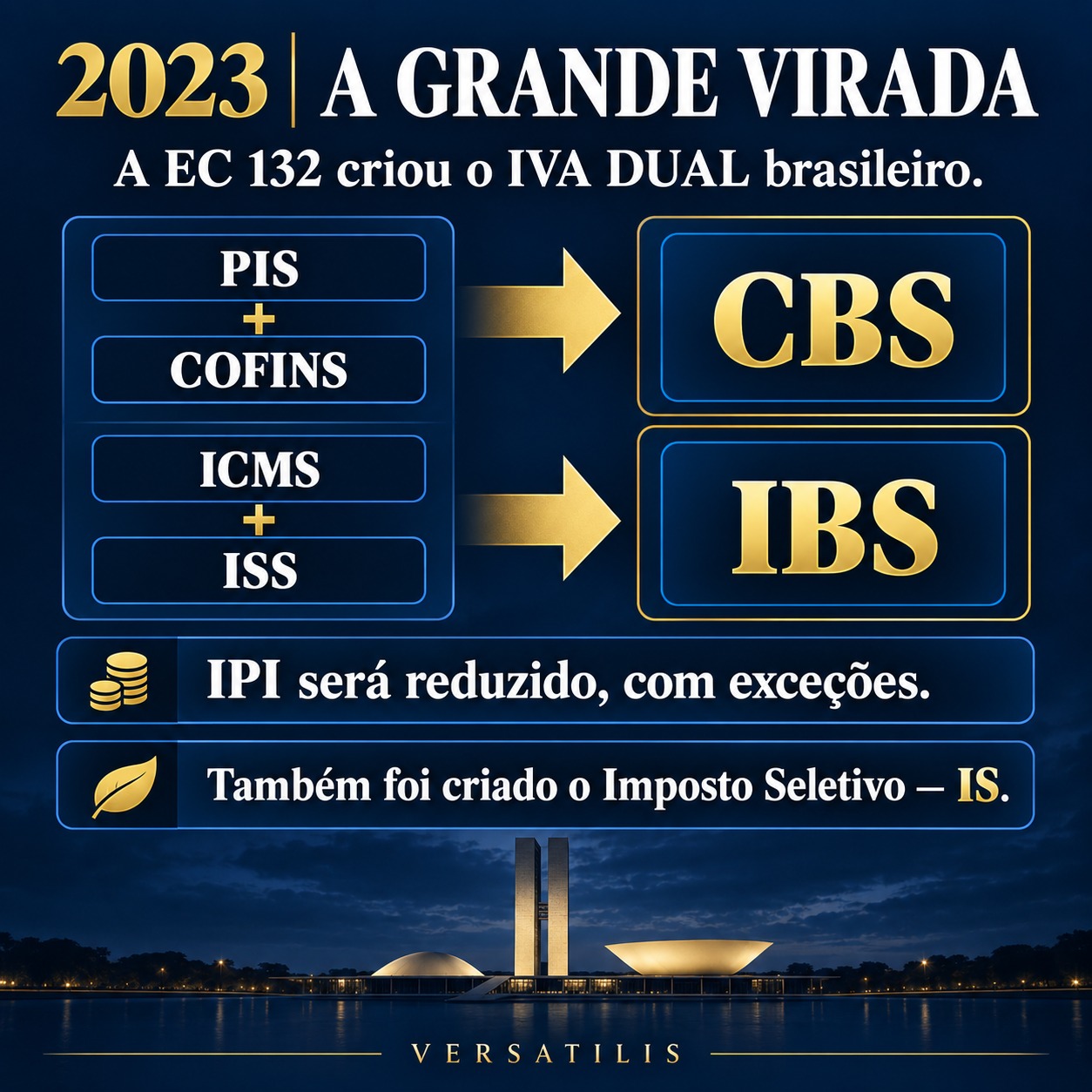
The change is gradual. In 2026, the testing phase takes place, with CBS at 0.9% and IBS at 0.1% highlighted, subject to waiver and offset rules when ancillary obligations are met. In 2027, PIS and COFINS are eliminated and CBS comes into effect; IBS remains in its initial phase. From 2029 to 2032, ICMS and ISS are gradually reduced while IBS grows. In 2033, the new model takes full effect.
Ano Relevant milestone
2026 Operational test: CBS at 0.9% and IBS at 0.1%, with its own rules for obligations and waivers.
2027–2028 Effective CBS; extinction of PIS/Cofins; IBS at initial rate.
2029–2032 Gradual substitution of ICMS and ISS by IBS.
2033 IBS and CBS fully implemented; ICMS and ISS abolished.
9. Accounting and tax considerations
• Maintain complete asset records, including date, cost, useful life, depreciation, and location of the asset.
• Reconcile the corporate book value with the tax value before the disposal.
• Identify and track the IBS and CBS credits appropriated upon acquisition.
• Review contracts to determine whether the price is net or includes the new taxes charged on top.
• Correctly classify the operation and issue the appropriate electronic fiscal document.
• Jointly project cash flow, IBS/CBS debit, IRPJ, CSLL, and any IRPJ surcharge.
• Simulate the sale to a taxpayer and non-taxpayer buyer, as the economic value of the credit can affect the negotiation.
• Under Simples Nacional, compare remaining in the internal model with the option for the regular IBS/CBS regime.
10. Conclusion
The Reforma Tributaria tends to improve neutrality in the acquisition of capital goods by allowing, under the regular regime, full and immediate IBS and CBS credits. In contrast, the sale of used goods now requires extra attention, because the onerous transaction will, as a rule, be subject to the new taxes on the total negotiated amount.
Capital gain does not disappear. It continues to be calculated as the difference between the sale price and the net book value and remains relevant for IRPJ and CSLL. Therefore, the decision to sell, replace, or keep an asset should consider three elements: the credit recovered on input, the IBS/CBS debit on output, and income taxation on the gain.
More than a change in tax rates, the new model requires integration across asset accounting, tax, contracts, invoicing, and financial planning. Companies that begin this organization during the transition will be better positioned to price their goods, avoid documentation errors, and protect cash flow.
References
• BRAZIL. Constitution of the Federative Republic of Brazil of 1988, as amended by Constitutional Amendment No. 132 of December 20, 2023.
• BRAZIL. Complementary Law No. 214, of January 16, 2025, with subsequent amendments. Establishes IBS, CBS, and Selective Tax.
• BRAZIL. Complementary Law No. 87, of September 13, 1996. Provides for ICMS.
• BRAZIL. Law No. 9,718, of November 27, 1998. Provides for PIS/Pasep and Cofins.
• BRAZIL. Law No. 9,249, of December 26, 1995. Provides for Corporate Income Tax (IRPJ) and Social Contribution on Net Profit (CSLL).
• BRAZIL. Federal Revenue Service. Understanding the Consumption Tax Reform (Reforma Tributária). Official transition timeline.
• COMMITTEE ON ACCOUNTING PRONOUNCEMENTS. CPC 27 — Fixed Assets.
• RECEITA FEDERAL DO BRASIL. Questions and Answers for Legal Entities — IRPJ and CSLL.
Technical note: article prepared for educational purposes, based on legislation available in September 2026. Rates, tax documents, specific regimes, and complementary regulations must be confirmed on the date of each transaction.